
See what customers love, complain about, and expect next.
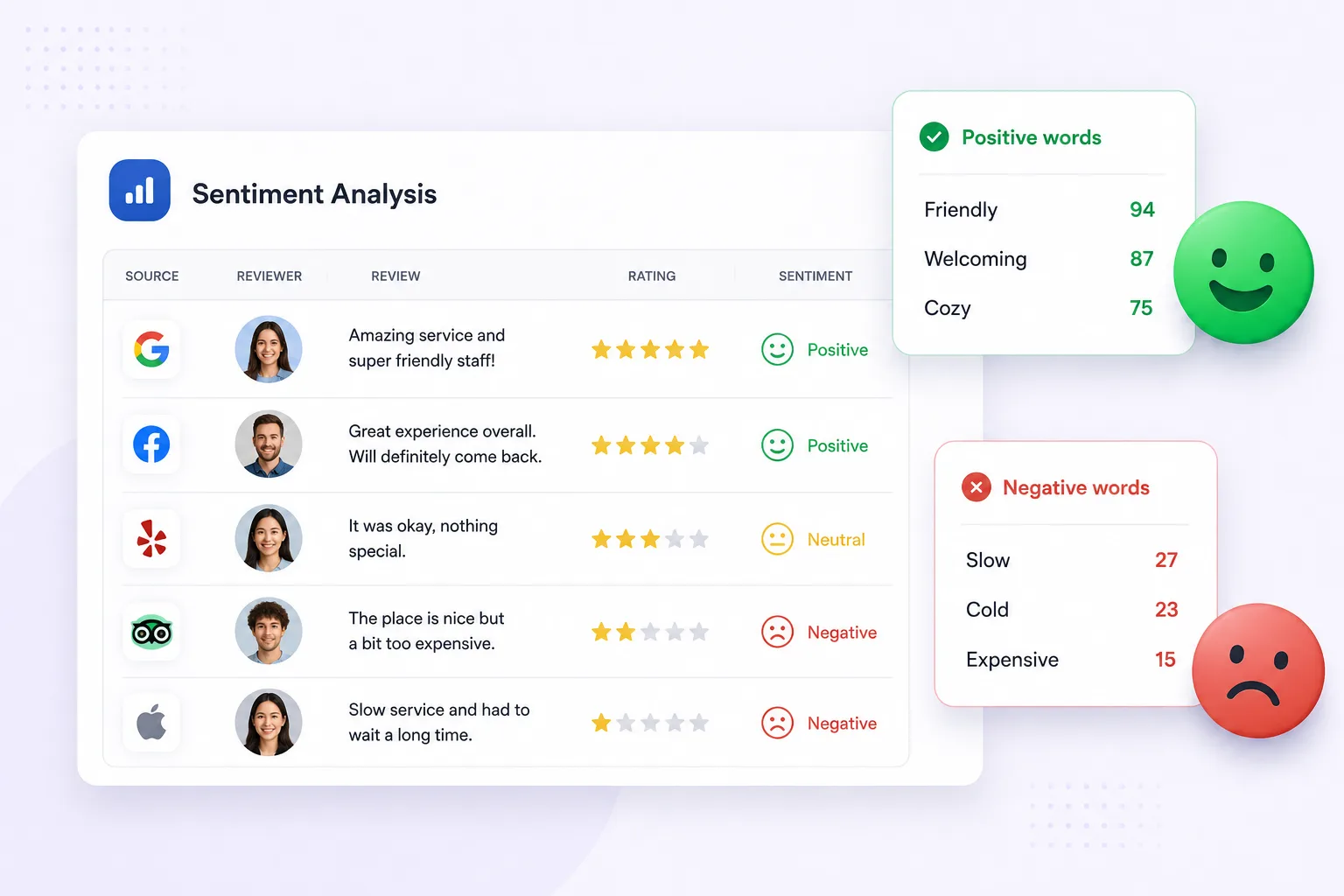
Review sentiment analysis reads every review you receive, scores it positive, neutral or negative, and tags it by theme, so you can see what customers love and what keeps going wrong without reading hundreds of reviews by hand.
Free forever for Google · No card required · Built for service businesses everywhere
Hundreds of reviews, no time to read them all.
The patterns that matter (slow service, one brilliant member of staff, quiet concerns about value) are buried in paragraphs of text. Reading everything is the only way to find them, and nobody has the time. So the same complaint repeats for months before anyone notices it is a pattern rather than a bad day.
Too much to read
Reviews pile up faster than anyone can read and summarise them.
Hidden patterns
The recurring complaint is in there. You just can’t see it across dozens of reviews.
Gut-feel decisions
Without themes, you’re guessing at what to fix first.
From raw reviews to clear themes.
Reviews come in
Every review flows into ReviewsGauge automatically.
AI reads the sentiment
Each review is scored positive, neutral or negative and tagged by theme.
You see the picture
Themes and trends surface so you know exactly what to act on.
Know what customers actually feel.
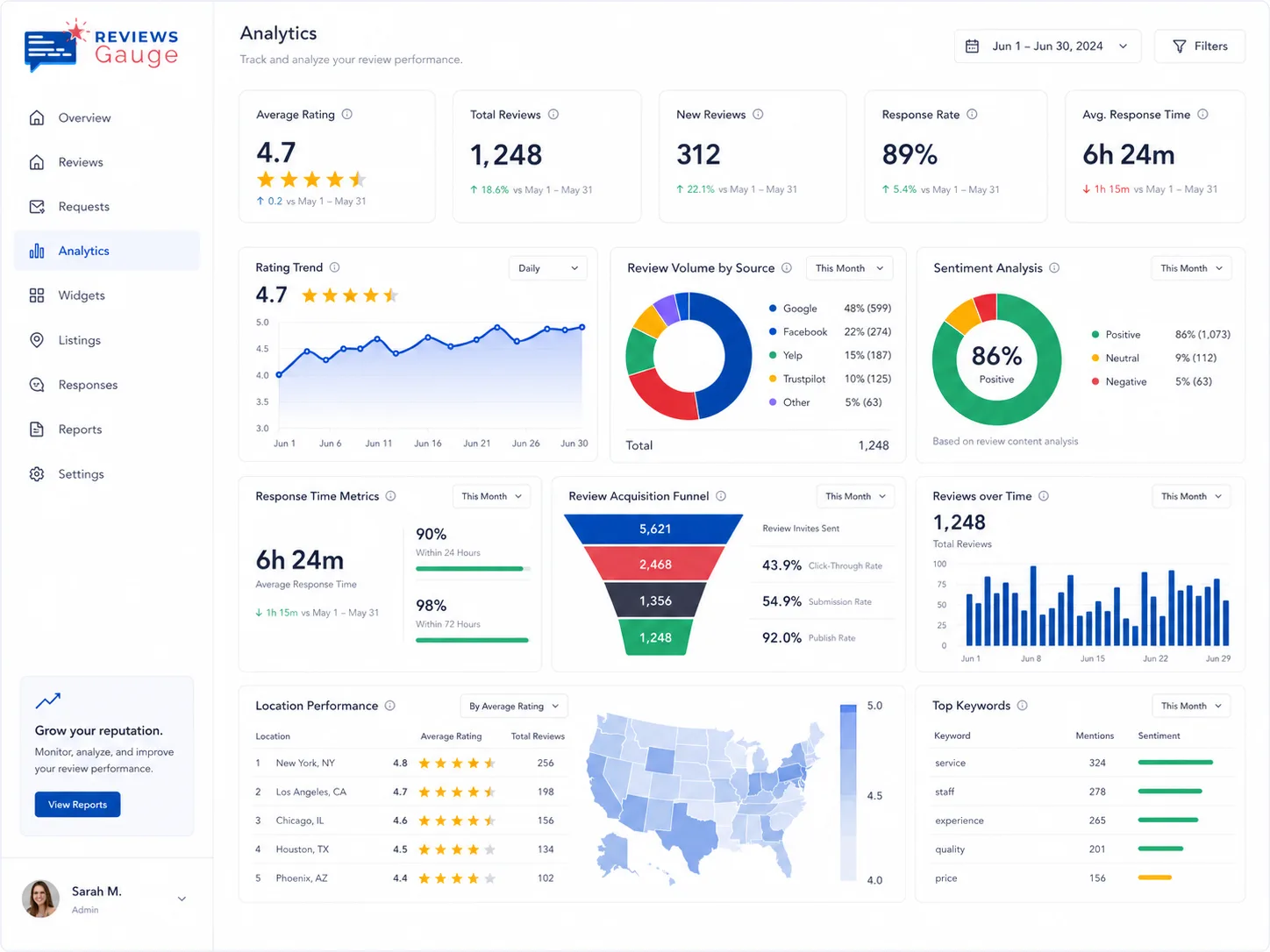
Every review is scored automatically as positive, neutral or negative, and those scores build into a trend you can actually read. When you change something (a new supplier, different opening hours, an extra person on Saturdays) you can watch the effect on sentiment over the following weeks instead of guessing from your star average. Sentiment is tracked per location too, so a group can compare sites side by side.
- Sentiment scored automatically
- Trends over time
- Compare across locations
Fix the right things first.
Themes are ranked by how often they come up and how strongly customers feel about them, which turns a wall of feedback into a short list worth acting on. One angry review about parking is noise. Forty mentions of parking across three months is a decision. Sentiment analytics is what tells those apart, and it works across the languages your customers actually write in.
- Themes ranked by impact
- Spot issues before they spread
- Turn feedback into action
Understand your customers at a glance.

Theme detection
Group feedback into what matters.

Sentiment trends
See the direction of travel over time.

Location compare
Spot which site needs attention.
Better together.

Who uses sentiment analytics.
Massage & Spa · Restaurants & Cafés · Medical Practices · Hotels & Resorts · Franchises · E-commerce & Retail
Further reading: Dental reputation management: a practical guide for practices · Google review QR codes: how they work and where to put them · How to get your Google review link
Sentiment Analytics, answered.
How does sentiment analysis work?
Does it work in multiple languages?
Can I compare locations?
What is review sentiment analysis?
How accurate is it on very short reviews?
What kinds of themes does it detect?
Can I see how sentiment changes over time?
Do I still need to read reviews myself?
Last updated